
Expert Interview | Super El Niño: Why This Event Could Be the Most Significant in More Than a Decade
- 17 July 2026
- Category: News

Climate scientists are closely monitoring the Pacific. Seasonal forecasts suggest that a Super El Niño could develop in the coming months, potentially becoming the strongest event since 2015–2016.

Beyond its impact on weather, an event of this magnitude can profoundly reshape ocean dynamics: ocean circulation, nutrient-rich upwelling, nutrient availability and the distribution of marine species. For fisheries, these changes represent a major challenge. How can we better understand these processes? More importantly, how can we anticipate them using satellite observations and ecosystem modelling?
To answer these questions, we spoke with Maxime Lalire, Oceanographer & Fisheries Expert, and Laurène Merillet, Marine Ecosystem Modeller, both members of CLS’s Fisheries Expert team, specializing in the observation, modelling and forecasting of marine resources.
We could be witnessing one of the most significant El Niño events in more than a decade.
Why is there so much attention on this potential Super El Niño?
Maxime Lalire: El Niño events occur regularly, but truly extreme episodes remain rare. The benchmark events were 1997–1998 and 2015–2016, both of which profoundly altered ocean conditions on a global scale. Current forecasts suggest that the next event could reach a similar intensity. If confirmed, it could become the most significant El Niño event observed in more than a decade.
Laurène Merillet: The more intense an El Niño event is, the greater its potential impact on marine ecosystems. Species respond to changes in their habitat. As soon as sea temperature, prey availability or ocean currents change, suitable habitats also shift. As a result, some species can move their distribution by several hundred kilometres.
Why is this Super El Niño being so closely watched? What could happen in the coming months if forecasts are confirmed?
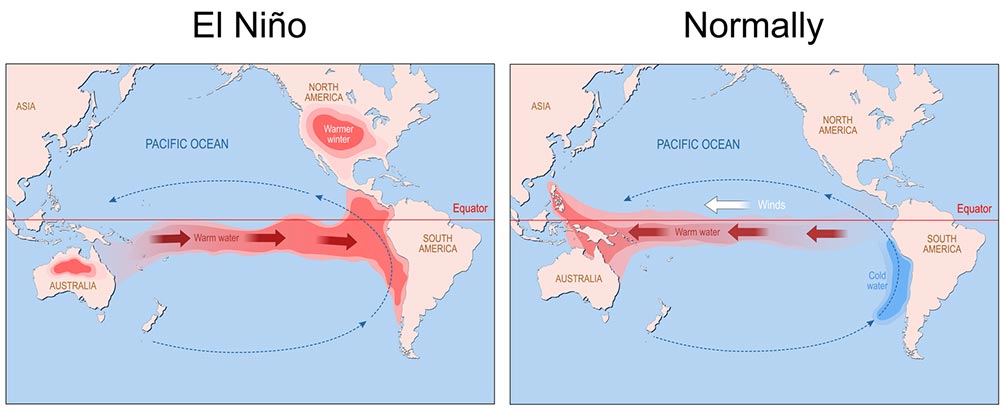
Maxime Lalire: If current forecasts hold, a Super El Niño is likely to develop, with sea surface temperature anomalies exceeding +2°C in a key region of the equatorial Pacific. The resulting warmer waters and weakened coastal upwelling off Peru are expected to substantially reduce the nutrient supply that sustains marine productivity. This event is being closely monitored because it affects the Humboldt Current upwelling system, the largest and most productive eastern boundary upwelling ecosystem in the world. It supports the Peruvian anchoveta fishery, one of the largest in the world by catch volume, while the upwelling system itself plays a crucial role in regulating regional and global climate.
Have previous El Niño events already caused shifts in marine species?
Maxime Lalire: Yes, this has already been observed. It all begins with weaker trade winds, which modify ocean circulation. These changes then trigger sea surface temperature anomalies across the tropical Pacific. Upwelling weakens, reducing the nutrient supply that fuels marine productivity, as Laurène explained.
Laurène Merillet: These changes have very tangible consequences for fisheries. Reduced upwelling along the coasts of Peru and Ecuador lowers ecosystem productivity, affecting small pelagic species such as Peruvian anchovy first. In tuna fisheries, favourable habitats for skipjack tuna gradually shift from the western Pacific towards the central and eastern tropical Pacific, changing fishing grounds and access to marine resources.
How do the models developed by the Expertise team improve anticipation of Super El Niño impacts?
Laurène Merillet: Marine ecosystem modelling combines ocean observations with our understanding of how marine ecosystems function. It integrates ocean physics, biological production, prey availability and the ecological preferences of species to simulate how their habitats evolve over time.
Maxime Lalire: This approach is particularly valuable during a Super El Niño, when all components of the ocean evolve simultaneously. Looking only at sea surface temperature provides only part of the picture. By combining satellite observations, ocean circulation models and ecosystem modelling, we gain a more comprehensive understanding of how the ocean is changing. This makes it possible to better anticipate changes in marine ecosystems and help fisheries stakeholders and coastal states adapt their activities.
If this Super El Niño develops, what will be the biggest challenge for fisheries?
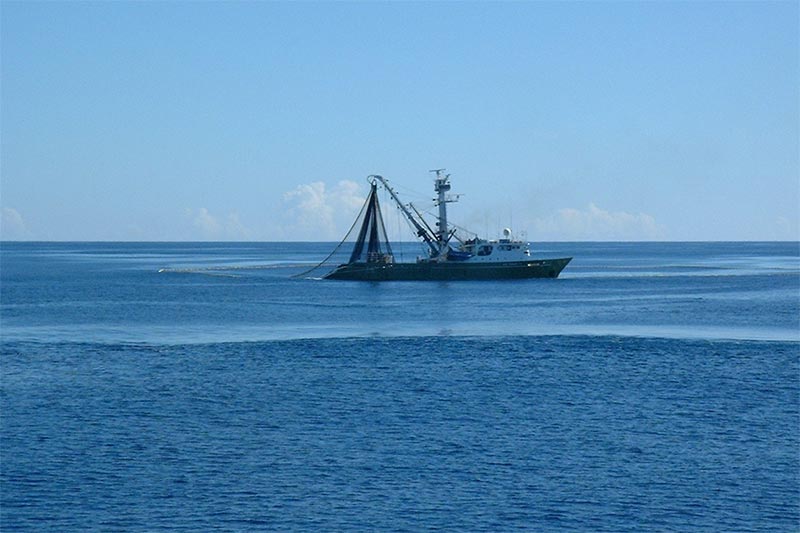 Maxime Lalire: A Super El Niño can rapidly alter the distribution of species targeted by fisheries, including small pelagic fish and tuna. The key challenge is to anticipate these shifts so that fishing strategies and fisheries management measures can be adapted, whether through stock assessments, spatial management, seasonal closures or catch quotas.
Laurène Merillet: This is where forecasting tools become essential. By combining satellite observations, ocean circulation models and ecosystem modelling, they help anticipate the impacts of a Super El Niño and support decision-making for fisheries professionals and coastal states. The goal is to provide reliable information early enough to act before impacts become visible.
Anticipating the Impacts of a Super El Niño
In the face of a Super El Niño, the challenge is no longer simply to observe the ocean, but to anticipate the rapid changes it triggers in marine ecosystems in order to better support fisheries management. As these ecosystems evolve, coastal states, Regional Fisheries Management Organizations (RFMOs) and fisheries stakeholders must continuously adapt their strategies, from fishing grounds and resource monitoring to management measures.
By combining satellite observations, oceanographic expertise and ecosystem modelling, CLS helps to:
- Monitor changes in ocean conditions and marine habitats;
- Understand their impacts on marine ecosystems and fish stocks;
- Anticipate future changes to support informed decisions by coastal states, RFMOs and fisheries stakeholders.
From the Peruvian anchovy fishery to Pacific tuna fisheries, anticipating the impacts of a Super El Niño has become essential to building more resilient and sustainable fisheries.