DigiWaves: CLS contributes to the Digital Transformation of Fisheries Monitoring in Europe
- 3 November 2026
- Category: News
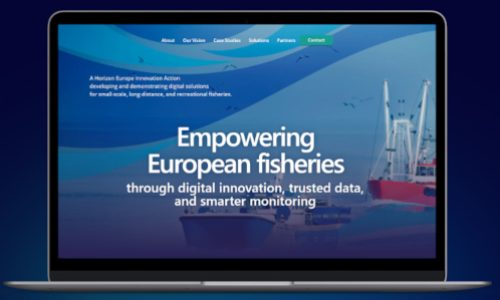
How can digital technologies improve fisheries monitoring, enhance data quality, and contribute to more sustainable marine resource management? This is the central ambition of DigiWaves, a new European project in which CLS is participating by bringing its expertise in fisheries monitoring, VMS and ERS systems, and artificial intelligence.
Funded by the Horizon Europe programme, DigiWaves (Driving the Digital Transformation of Fisheries – Towards Transparent and Sustainable European Fisheries through Digital Innovation in Monitoring, Control and Surveillance) is a four-year research and innovation project launched in October 2026 and coordinated by the Belgian research institute ILVO.
Bringing together 20 partner organisations from nine European countries, the project aims to accelerate the digital transformation of three fisheries segments: Small Scale Fisheries (SSF), Long Distance Fisheries (LDF), and Recreational Fisheries.
In response to growing challenges related to traceability, regulatory compliance, and marine resource conservation, DigiWaves aims to develop, test, and validate digital solutions tailored to the operational realities of different fishing fleets.
The project brings together 13 technological solutions, including vessel monitoring systems, electronic catch reporting, onboard sensors, remote electronic monitoring, and artificial intelligence. The objective is to facilitate data collection, improve data reliability and interoperability, and make monitoring systems more accessible and efficient.

An Official Kick-off in Bilbao to Launch Four Years of European Collaboration
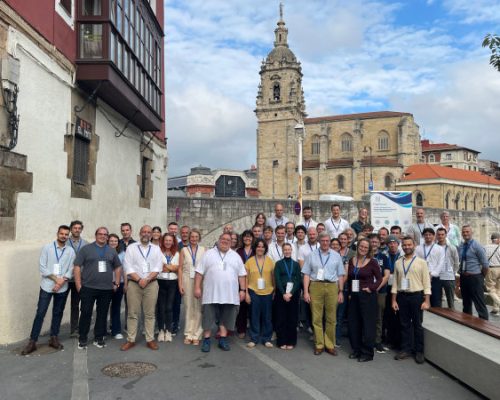
From October 13 to 15, 2026, the DigiWaves consortium partners gathered in Bilbao, Spain, for the Kick-off Meeting hosted by AZTI.
This meeting marked the official launch of four years of collaboration between research institutions, technology providers, fisheries organizations and other stakeholders involved in marine resource management.
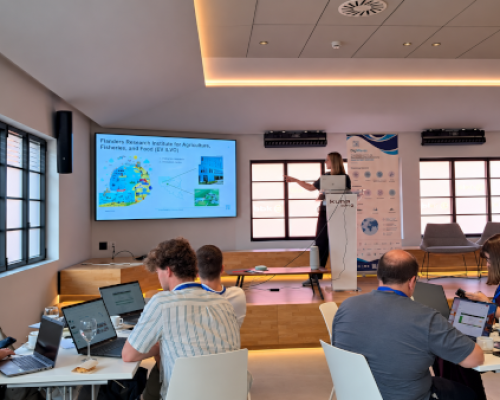
Over three days, partners presented their expertise, defined key priorities and laid the foundations for the work ahead. Discussions focused in particular on the digital maturity of different fishing fleets, the development and validation of technologies, data quality and standardization, and the use of data in fisheries monitoring and control systems.
Collaborative workshops also provided an opportunity to address the specific needs of the three fisheries segments covered by the project, as well as challenges related to the responsible use of artificial intelligence, data sharing and data governance.
This kick-off meeting represents an important first step towards bringing together technological innovation, scientific expertise and the practical needs of end users.
Improving Digital Monitoring of Small-Scale Fisheries Through VMS and ERS
Small-scale fisheries are one of the main focus areas of DigiWaves. While digital monitoring systems are already widely used by certain industrial fishing fleets, their deployment in small-scale fisheries remains more challenging.
As the European fisheries control framework evolves, developing solutions tailored to small-scale fisheries is essential to improving the traceability of fishing activities, simplifying reporting requirements, and strengthening knowledge of fishing practices.
Vessel Monitoring Systems (VMS) and Electronic Reporting Systems (ERS) play complementary roles. VMS provides information on vessel movements, while ERS facilitates the transmission of data related to catches and fishing operations.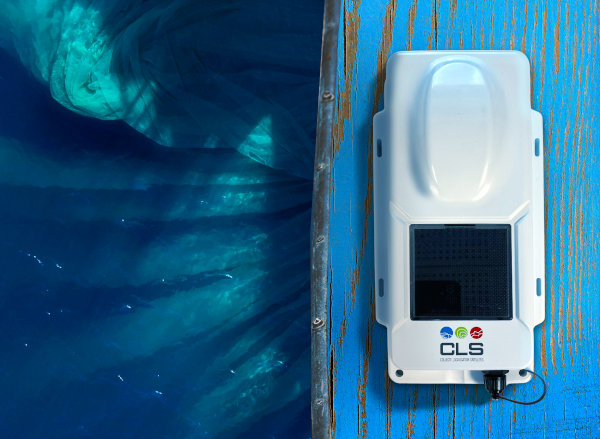
As part of DigiWaves, CLS will test its NEMO VMS device and Fishlog application on board small-scale fishing vessels in Greece. Additional sensors connected to NEMO will also collect data on fishing gear. This information will be automatically transmitted to the FishWeb platform, allowing fishers to track their vessel movements and project partners to better analyse fishing activities and reported catches.
These trials will assess the integration of different technologies in real-world operating conditions, with the aim of developing tools tailored to fishers’ day-to-day constraints and the needs of fisheries monitoring authorities.
Leveraging Artificial Intelligence to Better Understand Fishing Activities
Beyond data collection, DigiWaves aims to advance data analysis through artificial intelligence. One of the key challenges of digital fisheries monitoring is distinguishing vessel movements from actual fishing operations and linking detected activities to reported information.
In this context, CLS will develop machine learning models designed to detect fishing operations and identify the types of fishing gear used based on VMS trajectories collected by NEMO.
Data collected by onboard sensors during the trials will help identify when fishing gear is deployed and retrieved. This information will be used to identify fishing phases within VMS trajectories, which will then support the training and validation of machine learning models, improving their ability to recognise different fishing activities.
Ultimately, these developments could contribute to more accurate and efficient fisheries monitoring, while providing additional insights to fisheries control authorities and resource managers.
Extending Digital Innovation to Long Distance Fisheries
DigiWaves also addresses the specific challenges of high-seas fisheries, where vessels sometimes operate for extended periods far from the coast and monitoring infrastructure.
To address these challenges, the project will explore the potential of Remote Electronic Monitoring (REM) technologies, which enable the collection of information on activities carried out on board. CLS will participate in sea trials of the THALOS OceanLive system, as part of experiments conducted on board longline fishing vessels operating in the Indian Ocean.
CLS will also develop a machine learning model capable of automatically detecting fishing activities based on vessel trajectories. The aim will be to compare these results with ERS declarations and REM analyses to assess how these different data sources can complement one another.
By combining VMS, ERS, onboard sensors, and artificial intelligence, DigiWaves aims to advance the collection, analysis, and interoperability of fisheries data. Through its NEMO, Fishlog, and FishWeb solutions, CLS will contribute to testing these innovations under real operating conditions. This European project fully aligns with CLS’s commitment to the digital transformation of the fisheries sector, supporting more effective monitoring, improved traceability, and more sustainable marine resource management.
Funded by the European Union. Views and opinions expressed are however those of the author(s) only and do not necessarily reflect those of the European Union or the European Research Executive Agency (REA). Neither the European Union nor REA can be held responsible for them.