
El Niño Is Back: Understanding Its Effects on Marine Ecosystems and Fisheries Dynamics
- 7 May 2026
- Category: News
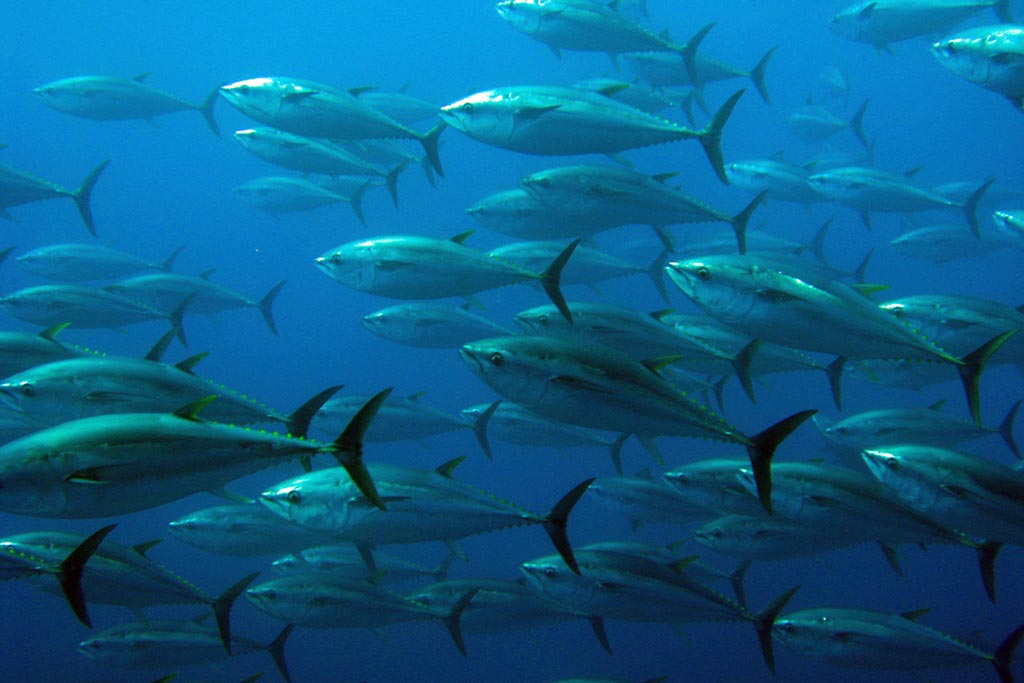
El Niño is back. According to the World Meteorological Organization, there is around a 40% chance that an event will develop between May and July, while NOAA estimates up to a 90% probability that El Niño conditions will be established by September.
Following the significant 2024 episode, this convergence of forecasts is a strong signal for the fisheries sector. El Niño fisheries impacts are closely monitored because they directly affect ocean conditions, marine ecosystems, and the distribution of fishery resources across the Pacific.
El Niño & La Niña: Back to Basics
El Niño and La Niña are two major climate phenomena that directly influence ocean dynamics and fisheries productivity.
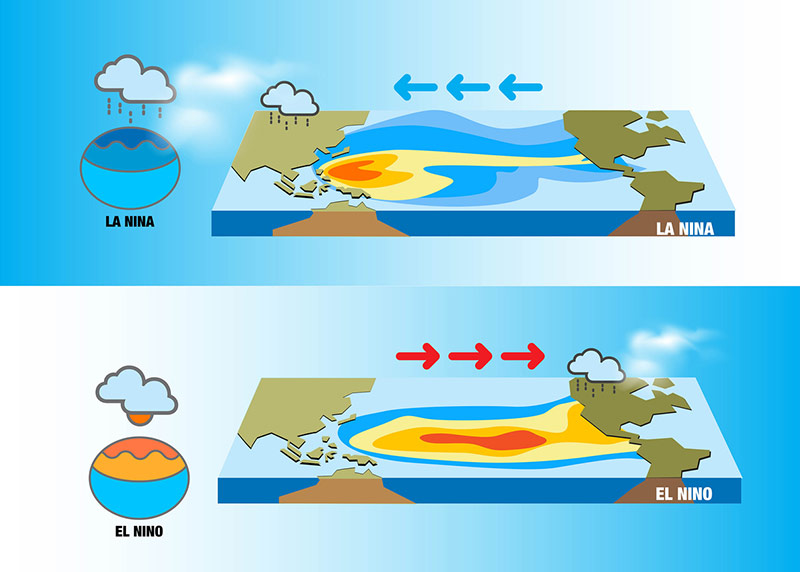 Under normal conditions, trade winds push warm surface waters westward across the Pacific. This creates a warm pool in the western basin and triggers strong upwelling in the east through the Humboldt system. This nutrient-rich upwelling supports one of the most productive marine ecosystems in the world, sustaining major fisheries targeting anchovies, sardines, and tuna. Nearly half of global skipjack tuna catches occur in the western Pacific.
During La Niña, this system intensifies. Stronger winds enhance upwelling, increasing productivity in the eastern Pacific and boosting small pelagic catches. At the same time, skipjack tuna fishing grounds in the west become more concentrated.
During El Niño, the system weakens. Reduced winds limit upwelling, warming the eastern Pacific and decreasing productivity. Meanwhile, the western warm pool expands toward the central and eastern Pacific, extending favorable habitats for skipjack tuna and shifting fishing grounds.
El Niño: What It Changes for Fisheries and Ocean Dynamics
El Niño is driven by a relaxation of trade winds, which reduces the upwelling of cold, nutrient-rich waters along the west coast of South America. This leads to a warming of surface waters in the eastern equatorial Pacific, while the western Pacific becomes relatively cooler.
These changes directly disrupt ocean productivity and ecosystem structure. In the eastern Pacific, reduced nutrient supply limits primary production, weakening the entire food web from plankton to higher trophic levels. As a result, small pelagic species such as anchovies and sardines decline, creating significant challenges for fisheries in Peru, Ecuador, and Chile, where catches are highly dependent on these resources.
At the same time, El Niño alters atmospheric conditions, bringing heavier rainfall and increased risks of flooding along the coasts of South America, while the western Pacific experiences hotter and drier conditions, raising the likelihood of droughts and bushfires.
Highly migratory species such as tuna also respond to these shifting conditions. As the western Pacific warm pool expands eastward, favorable habitats move toward the central and eastern Pacific, leading to a redistribution of fish stocks and fishing effort. This creates operational and management challenges, requiring continuous adaptation from fisheries stakeholders and stronger regional cooperation.
 “During the El Niño phase of the El Niño–Southern Oscillation (ENSO) phenomenon, coastal upwelling within the Humboldt Current System weakens, leading to reduced nutrient availability in the epipelagic waters of the eastern Pacific.
Sea surface temperatures are concurrently higher than average. These meso‑scale oceanographic changes strongly affect local coastal fisheries targeting small pelagic species, as fish distributions shift in response to changing ocean conditions.
Similar impacts are observed higher in the trophic chain in the western Pacific, where skipjack tuna habitats track the eastward expansion of the warm pool.”
Alexandre Greve, Oceanographer at CLS Group
Key fisheries impacts:
- Lower productivity: Reduced upwelling decreases nutrient availability, leading to declines in small pelagic species and increased uncertainty for fisheries.
- Shift in skipjack tuna habitat: Favorable conditions expand eastward, redistributing fishing grounds and affecting access to resources.
SEAPODYM: Turning ocean science into fisheries intelligence
 “Climate variations and El Niño events in particular have a deep impact on the spatial distribution of marine life from plankton to exploited species such as tuna.
With tools like SEAPODYM, we can translate these environmental changes into concrete impacts on habitats and species distribution, helping anticipate stock movements and better understand the underlying dynamics.”
Laurène Merillet, Marine ecosystem modeller at CLS Group
At CLS, we support fisheries stakeholders worldwide by combining satellite data, ocean modeling, and scientific expertise. Our ecosystem-based approach, including SEAPODYM, simulates the effects of climate variability on ocean conditions, food webs, and species distribution.
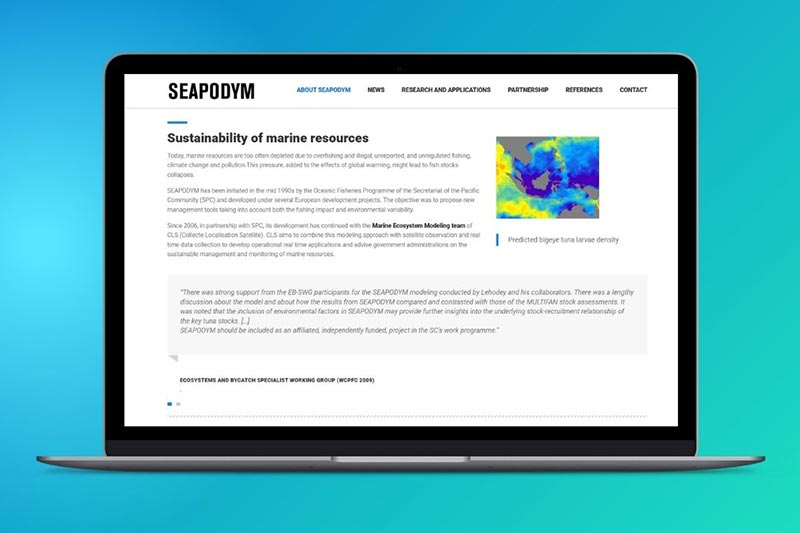 These tools help:
- anticipate habitat changes
- predict stock movements
- support adaptive and science-based management
With decades of experience in ocean monitoring, CLS works with governments, RFMOs, and industry stakeholders to improve decision-making and strengthen sustainable fisheries management.
El Niño is a powerful reminder of how sensitive marine ecosystems are to climate variability. By altering ocean conditions, it reshapes the entire food web from plankton to top predators such as tuna.
In an increasingly variable ocean, understanding and anticipating these dynamics is essential.
Monitoring fisheries today means understanding the ocean to better protect its resources.
Sources: