
When Fishing Data Sheds Light on Decisions at Sea
- 4 February 2026
- Category: News

Faced with growing economic, regulatory, and environmental challenges, industrial fishing fleets must now make fast and well-informed decisions, both at sea and on shore.
CLS supports fishing operators in this transition through ASTREE ANALYTICS, an analytics solution designed to leverage fishing history and oceanographic data.
By transforming data from past campaigns into directly usable insights, ASTREE ANALYTICS helps fleet managers better plan their campaigns, optimize operations, and reconcile economic performance with the sustainability of fisheries.
An approach built on fleet experience
Today, fishing fleets generate and accumulate large volumes of data from their own activity. Vessel positions, catches, fishing areas, fishing effort, and seasons form a valuable operational memory that is often scattered across different tools and difficult to exploit on a daily basis.
ASTREE ANALYTICS builds on this operational reality by offering an approach focused on making the most of existing data, without adding complexity to day-to-day operations.
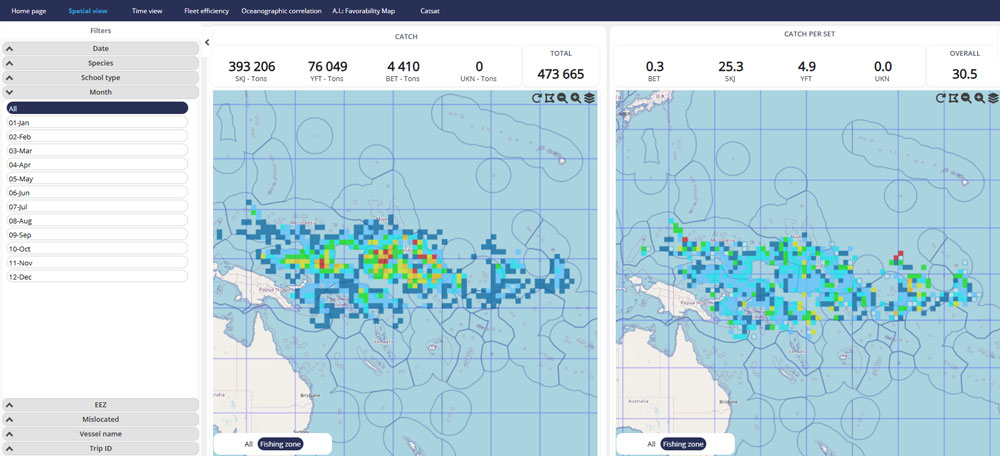
Developed by CLS fisheries experts, the solution makes it possible to consolidate a fleet’s fishing history and give it meaning. The objective is clear: help fishing operators better understand what has truly contributed to the success of past campaigns in order to inform future decisions.
Linking catch data and ocean conditions
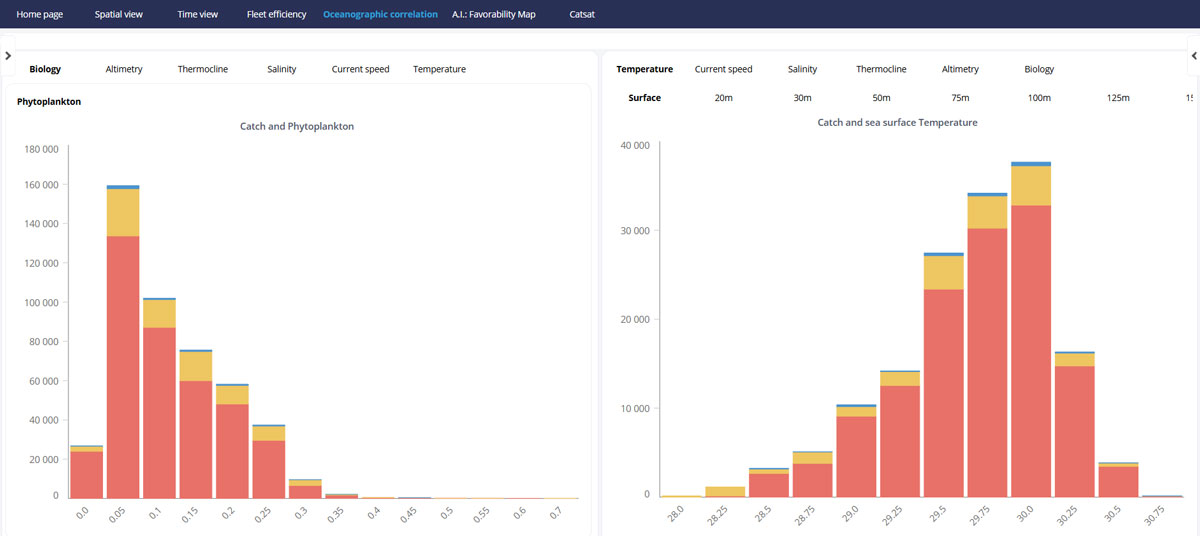
One of the key principles of ASTREE ANALYTICS is the correlation between fishing data and the environmental conditions encountered at sea.
By cross-referencing catch history with reliable oceanographic data from CLS databases, such as sea surface temperature, currents, or biological productivity, recurring patterns can be identified. This analysis highlights the spatial and temporal conditions under which campaigns have been most successful and provides fleet managers with a more objective view of their activity, based on measurable facts rather than isolated perceptions.
These insights can then be translated into operational actions. In just a few clicks, ASTREE ANALYTICS enables the creation of oceanographic filters based on conditions identified as favorable, which can then be exported to CATSAT.
This synergy between ASTREE ANALYTICS and CATSAT highlights areas that concentrate the environmental conditions historically associated with the highest fish abundances, making it easier to analyze, prepare, and orient fishing campaigns.
Planning campaigns and managing fleets through data
Based on the analysis of fishing history and ocean conditions, ASTREE ANALYTICS supports both campaign planning and the day-to-day management of fishing fleets. By highlighting the most favorable areas and periods for a given species, the solution helps reduce prospecting phases, better target fishing effort, and optimize distances traveled, logistics, and time spent at sea.
This consolidated view of activity also facilitates monitoring of catches, fishing areas, and fishing effort at the fleet level. By structuring and centralizing data, ASTREE ANALYTICS strengthens overall operational management while simplifying regulatory reporting and improving traceability, in a context of increasingly demanding compliance requirements.
Economic performance and fisheries sustainability
By helping fleets better target fishing areas and limit unnecessary movements, ASTREE ANALYTICS contributes to a more responsible approach to fishing activity. Optimizing operational decisions makes it possible to reconcile economic performance with the sustainable management of marine resources.
Data thus becomes a strategic lever, not only to improve campaign results, but also to embed fishing activity in a more sustainable and better-controlled long-term approach.
By leveraging fishing history and oceanographic data, ASTREE ANALYTICS enables fishing operators to turn past experience into a genuine strategic advantage. An approach that addresses a core need of the sector: making better decisions at sea, where every choice matters.